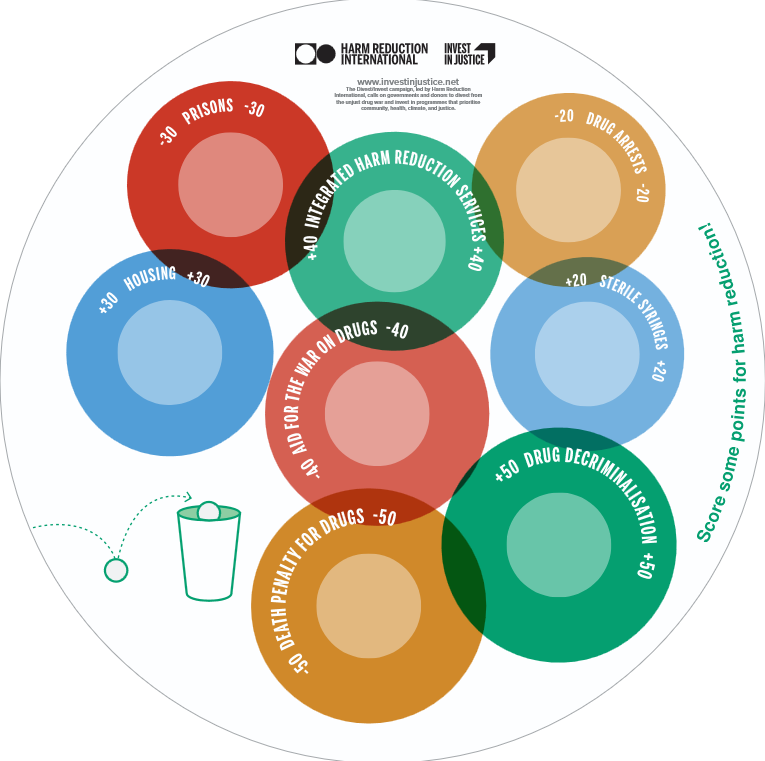
The war on drugs is unjust and ineffective.
Prioritising communities, health and justice works.
But governments continue to fund the war on drugs and fail to invest in justice.
The War on Drugs is Wasting Money
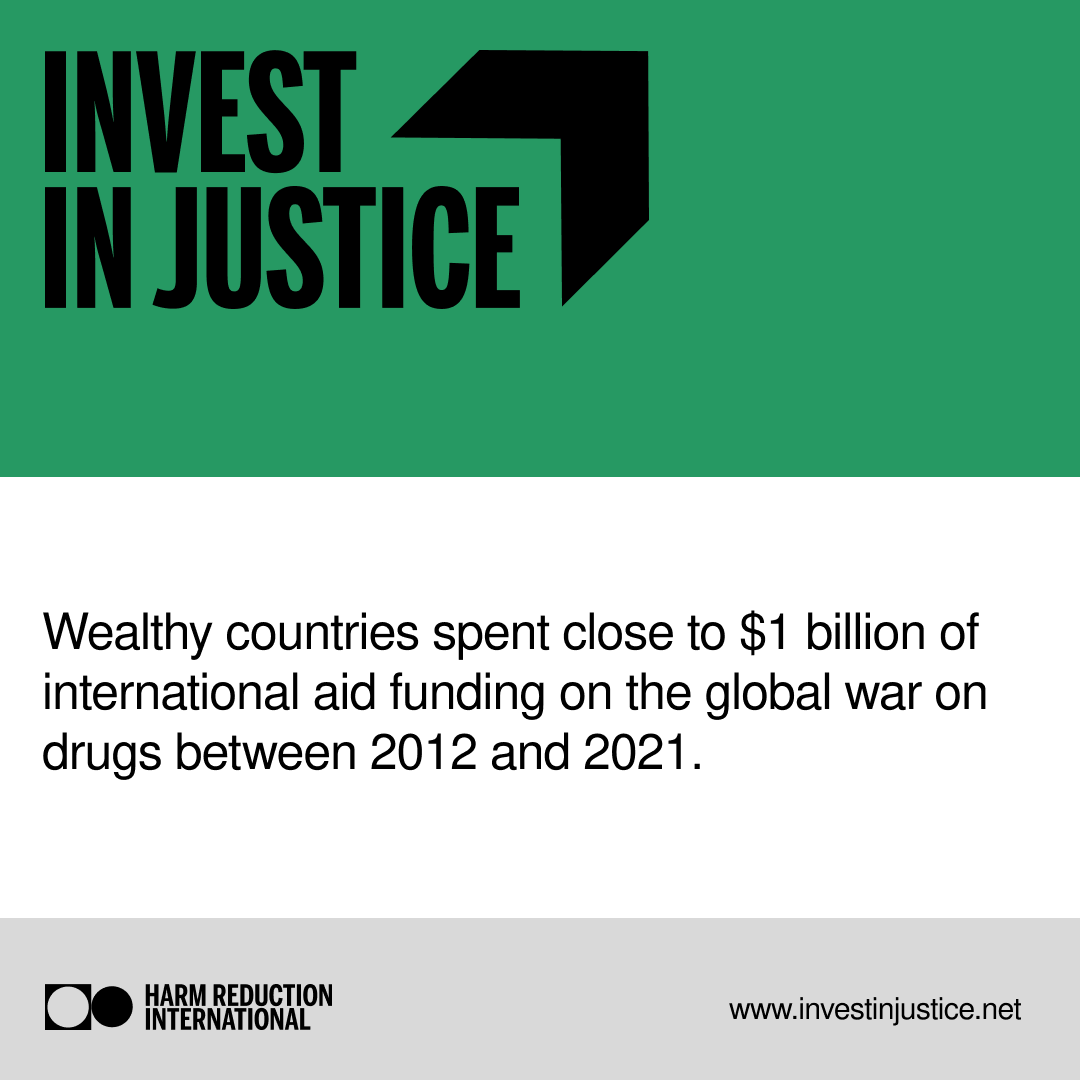
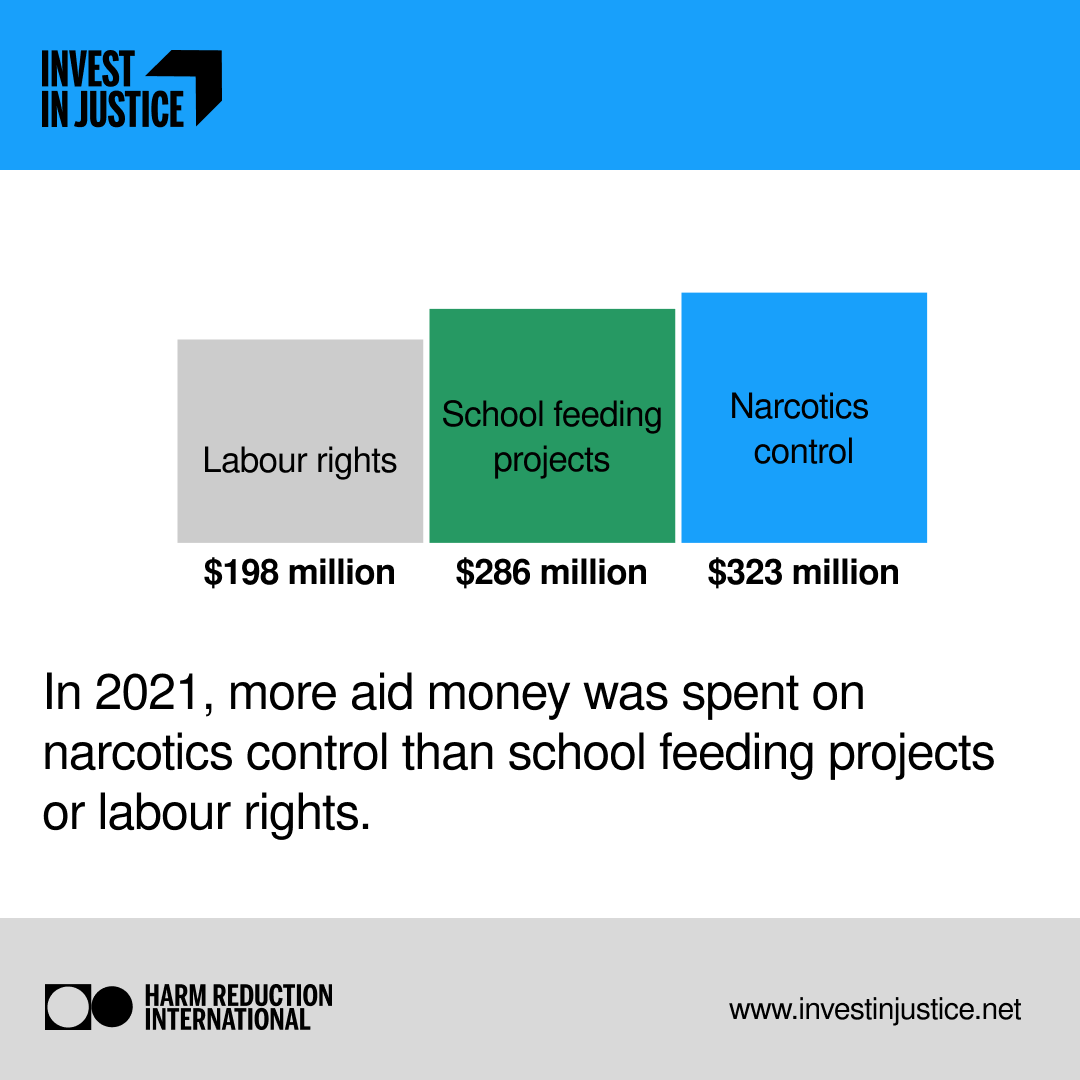
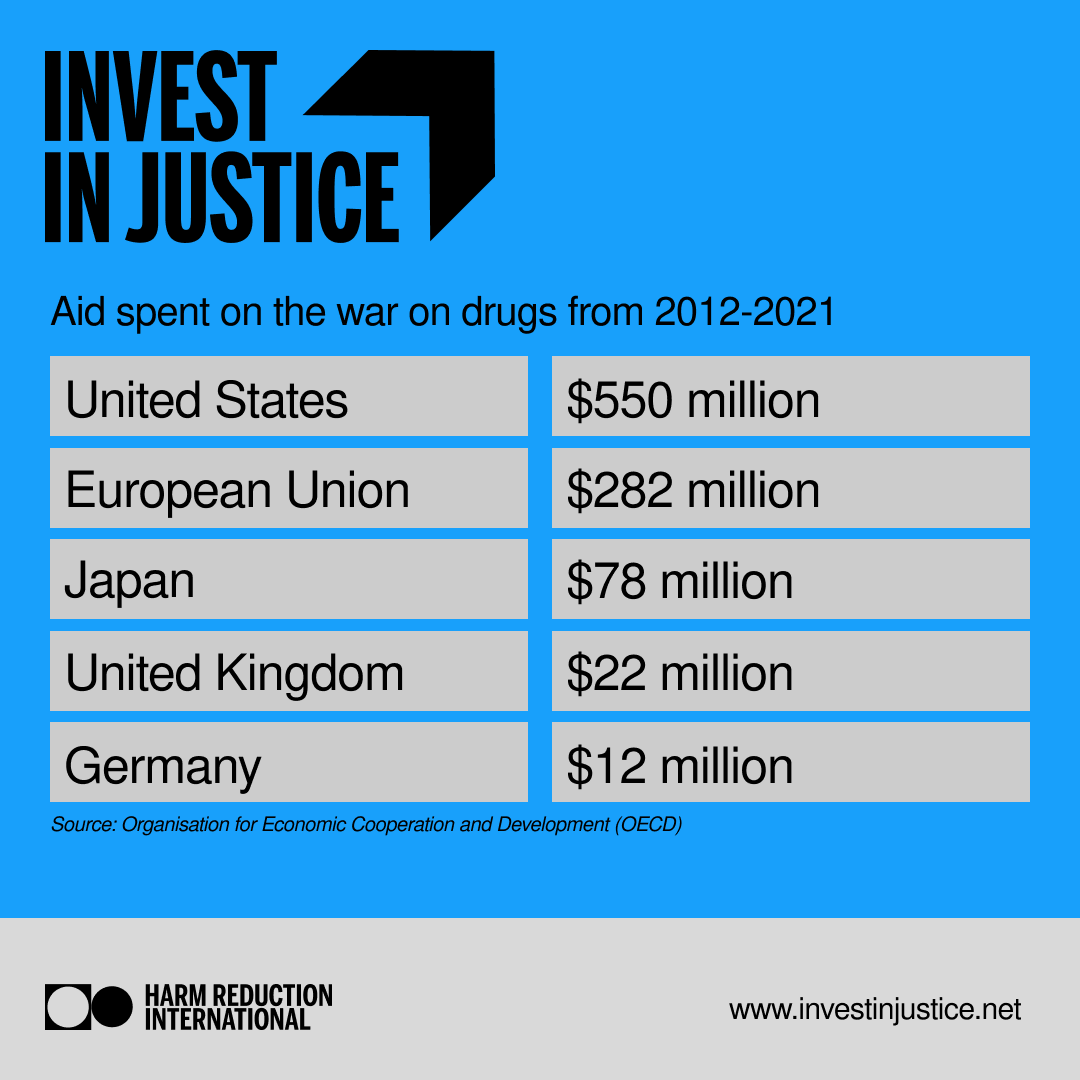
Between 2012 and 2021 aid spending on “narcotics control” cost $266,703 per day
An equivalent investment could fund:
329,263syringes per day
AN INTERSECTIONAL MOVEMENT FOR JUSTICE
The war on drugs disproportionately affects women, trans and gender diverse people.
While 1 in 3 drug users are women, they make up only 1 in 5 accessing drug treatment. Trans women are 49 times more likely to be living with HIV. These punitive laws also fuel mass incarceration—33% of imprisoned women globally are jailed for drug offences, with female imprisonment rates rising sharply, especially in Asia, the Pacific, and Latin America.
The war on drugs upholds racist structures.
In the USA, Black individuals are 4 times more likely to be arrested for drug possession than white individuals. In the UK, Black people are 9 times more likely to be stopped and searched under drug laws. Indigenous and Black communities in Canada, Australia, and the USA face higher incarceration rates and worse health outcomes due to lack of harm reduction services. Colonial-era drug policies continue to criminalise Indigenous communities and traditions, exacerbating health crises like HIV and hepatitis C.
The drug war destroys the environment.
Punitive drug policies and prohibition drive the drug trade into destructive practices. The promotion of alternative crop production damages soil and expands farmland, as farmers seek to increase production to account for loss of income. Damaging and indiscriminate policies, such as the aerial fumigation of illicit crops, drive deforestation, toxic pesticide use, and pollution, while driving illicit crop cultivation deeper into the forest, causing damage to previously untouched land.
RESOURCES
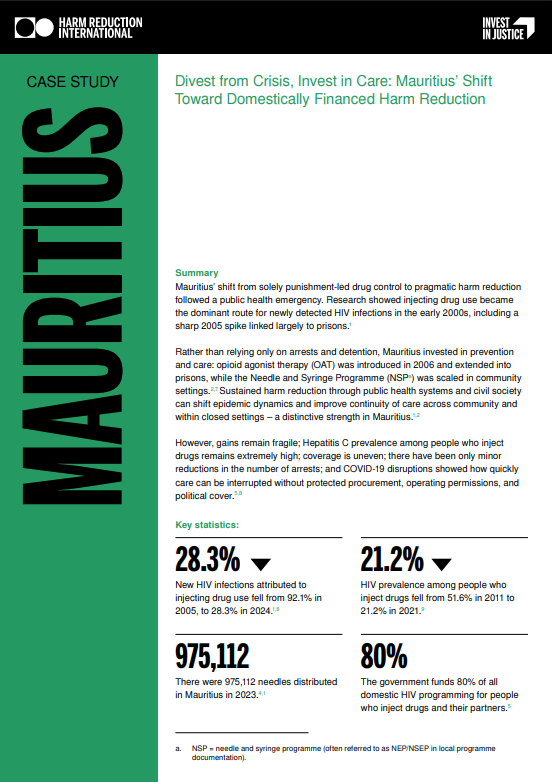
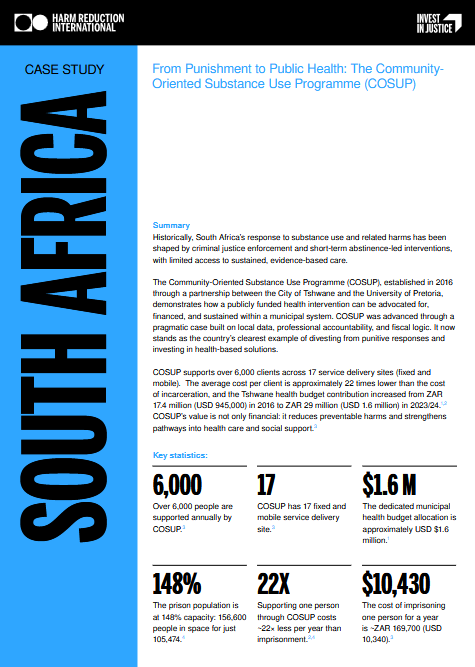
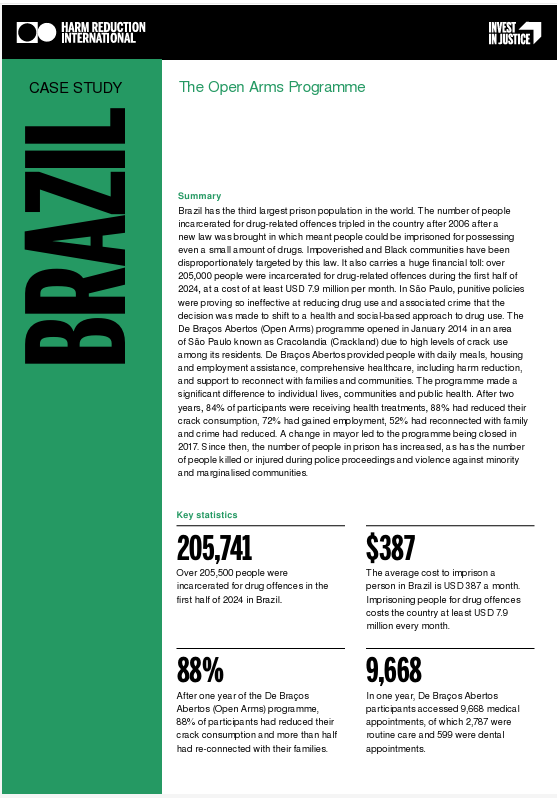
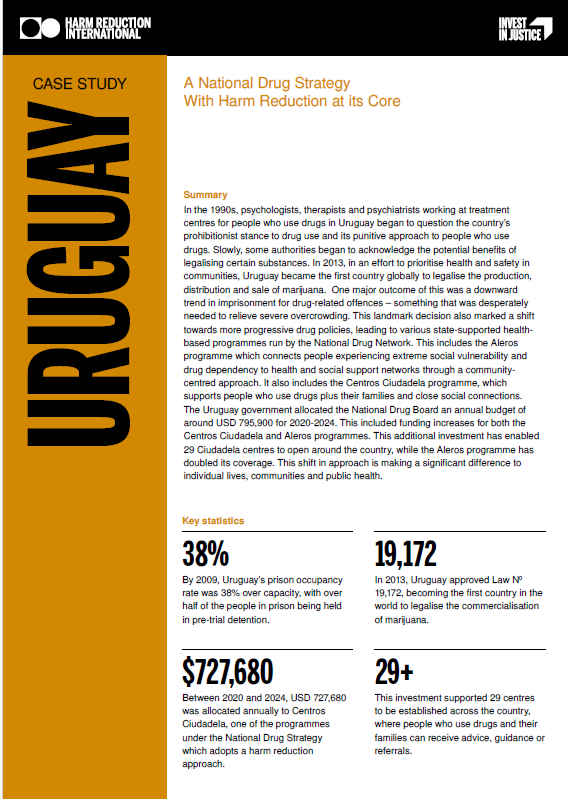
Criminalising drugs doesn’t decrease drug use or sale, and it doesn't help to reduce drug-related harms.
Punitive drug laws violate human rights, fuel racial injustice, and drive the spread of diseases like HIV and hepatitis—all while wasting public funds on ineffective, harmful policies. Governments and donors continue to pour money into punitive drug policies instead of investing in proven solutions that promote community, health, and justice.
We must divest from this ineffective and unjust response to drugs.
Join our campaign to invest in justice.
See our statement and sign-up for campaign alerts.
Divest from the unjust drug war. Invest in justice.
Criminalising drugs doesn’t decrease drug use or sale, and it doesn't help to reduce drug-related harms.
Punitive drug laws violate human rights, fuel racial injustice, and drive the spread of diseases like HIV and hepatitis—all while wasting public funds on ineffective, harmful policies. Governments and donors continue to pour money into punitive drug policies instead of investing in proven solutions that promote community, health, and justice.
We must divest from this ineffective and unjust response to drugs. When we do, we free up essential funds to invest in programmes that prioritise community, health, climate, and justice.
- We call on governments and donors to divest from the unjust drug war and related punitive drug law enforcement at the international, national, and subnational levels, and invest in programmes that prioritise community, health and justice.
- We call on donor countries to stop using money from their limited development aid budgets for narcotics control, which often violates human rights and undermines health and development goals.
- We call on donors and governments to be transparent, by publishing their national and international spending on harm reduction, drug policy, and punitive drug control measures.
This includes harm reduction as well as other social and community programmes that benefit marginalised people and lead to healthier, safer societies.
This campaign unites a broad and diverse coalition of people working in allied social justice movements that are challenging exclusion, criminalisation, stigma and discrimination. This includes advocates working on racial justice, criminal legal reform, gender justice, sex workers’ rights, LGBTQIA+ rights, and climate justice.
How you can help:
Drug Policy Advocates:
- Track your government spending on law enforcement and harm reduction using these tools.
- Urge donors to publish what they fund, and to divest from punitive drug control measures.
- Build solidarity with allied movements impacted by prohibition, climate degradation, and state violence.
Climate Justice Advocates:
- Identify and highlight prohibition as the root cause of the illicit drug trade and associated climate degradation.
- Advocate for divestment from harmful policies of “drug control” that cause damage to the environment.
- Highlight the benefits of regulating the illicit drug trade as an alternative development, to promote environmentally sustainable farming practices that foster thriving communities and ecosystems.
- Read more at the International Coalition for Drug Policy Reform and Environmental Justice.
Racial Justice Advocates:
- Recognize that punitive “drug control” measures stem from colonial-era legislation, and serve as an arm of neo-colonial power and influence over producer and transit countries.
- Recognize the criminalisation and control of plants, such as coca, as a denial of the rights of Indigenous people and an attack on their culture.
- Advocate for the decriminalization of illicit drugs and release of prisoners held on drug related charges, along with investment in harm reduction services.
Sex Worker Rights Advocates:
- Advocate for the decriminalisation of drug possession, along with the decriminalization of sex work, in line with UNAIDS recommendations.
- Advocate for divestment from ineffective forced treatment programs, and investment in harm reduction services integrated with sexual and reproductive health services, and access to justice.
LGBTQI+ Advocates:
- Call for investment in harm reduction along with other HIV prevention and treatment measures and build solidarity with communities of people who use drugs to end AIDS as a public health threat.
- Integrate harm reduction practices into existing LGBTQI+ health services, recognising drug use as a queer issue and meeting the needs of LGBTQI+ people who use drugs.
Join our campaign to invest in justice.
Sign up to receive campaign updates, advocacy tools, and inspiration from advocates around the world.
Thank you for signing up to our campaign!
Look out for campaign updates in your Inbox.